From a mining town in Yorkshire to leading some of Aotearoa New Zealand’s most important aquaculture breeding programmes, Dr Jane Symonds has built a career grounded in applied science, persistence, and strong industry connection.
Jane grew up in the United Kingdom, far from the sea.
“I come from a mining area in Yorkshire – nowhere near the sea – and I was the first person in my immediate family to go to university.”
She completed an honours degree in genetics in the UK, before moving to Australia to undertake a PhD in population and molecular genetics at the Australian National University.
“I did okay at science at school and did well in my degree—I found genetics fascinating.”
From early on, she was drawn to research that could be used in practical, real‑world settings.
That preference would shape the rest of her career.
Jane came to New Zealand on a post‑doctoral fellowship at the University of Canterbury, where she began working on King (Chinook) salmon, focusing on growth.
It was also where she met her husband, Dr Seumas Walker, who also has a background in applied aquaculture selective breeding, genomics, and fish production biology.
Career pathways in aquaculture were not always clear in the early 1990s, but Jane knew she wanted to keep working in aquaculture genetics and breeding.
“It wasn’t easy to get to the next step, but I also really wanted to stay in this part of the world.”
To better understand aquaculture from the ground up, she spent time at the Silverstream salmon hatchery near Kaiapoi.
In the early 1990s, Jane joined Southern Ocean Seafoods (now The New Zealand King Salmon Company Ltd), where she established New Zealand’s first commercial aquaculture breeding programme at a hatchery near Blenheim.
With strong support from her manager, Mark Gillard, she also established a molecular lab so genetic information could directly inform breeding decisions.
“He was really enthusiastic and supportive about having a breeding programme.”
Jane spent nearly a decade with NZ King Salmon and says the experience gave her invaluable insight into how the industry operates.
“I really appreciated that time because it gave me a good understanding of the industry and how it works.”
In 2000, Jane and her husband moved to Canada, where she became Director of Aquaculture at the Huntsman Marine Science Centre.
There, she worked mainly on Atlantic cod, which breed during challenging winter conditions: “It was very different from New Zealand.”
She co‑led a major Atlantic cod broodstock programme and helped secure significant funding for the work.
Jane returned to New Zealand in 2007, spending several years at NIWA before joining the Cawthron Institute in 2015 as a Senior Aquaculture Scientist.
Over her career, she has worked across a wide range of species.
“As a geneticist you can turn your expertise to any aquaculture species. I’m a finfish scientist, but the breeding principles are the same.”
Today, Jane leads research focused on genetics, selective breeding, and climate resilience. She says New Zealand is well positioned internationally in aquaculture breeding.
“We’re up there with the rest of the world.”
She is currently leading a five‑year Climate Adapted Finfish Programme, funded in 2023, which combines genetics, breeding and physiology with social science and mātauranga Māori and involves close engagement with industry and iwi.
“We’re asking how we can best breed for things like thermal tolerance. The social science side is about getting people together and thinking about how to adapt the uncertainty of climate change.”
Working in a male‑dominated industry, Jane believes visibility matters.
“It’s important to show that women can be in aquaculture at all levels.”
In 2025, Jane received the inaugural Women of Aquaculture Aotearoa Outstanding Service Award, recognising wāhine who have made a lasting impact on the sector.
“You work hard and you hope you’re doing a good job, but you don’t always know if anyone sees this.”
The recognition, and the messages from colleagues across the industry, meant a great deal.
“I am passionate about the aquaculture industry in New Zealand – to be recognised by that community was a real highlight.”
After more than 30 years in science, Jane’s advice is simple.
“Science can be hard sometimes, but perseverance and curiosity are key. There’s lots of exciting and useful stuff you can do – don’t lose sight of that.”
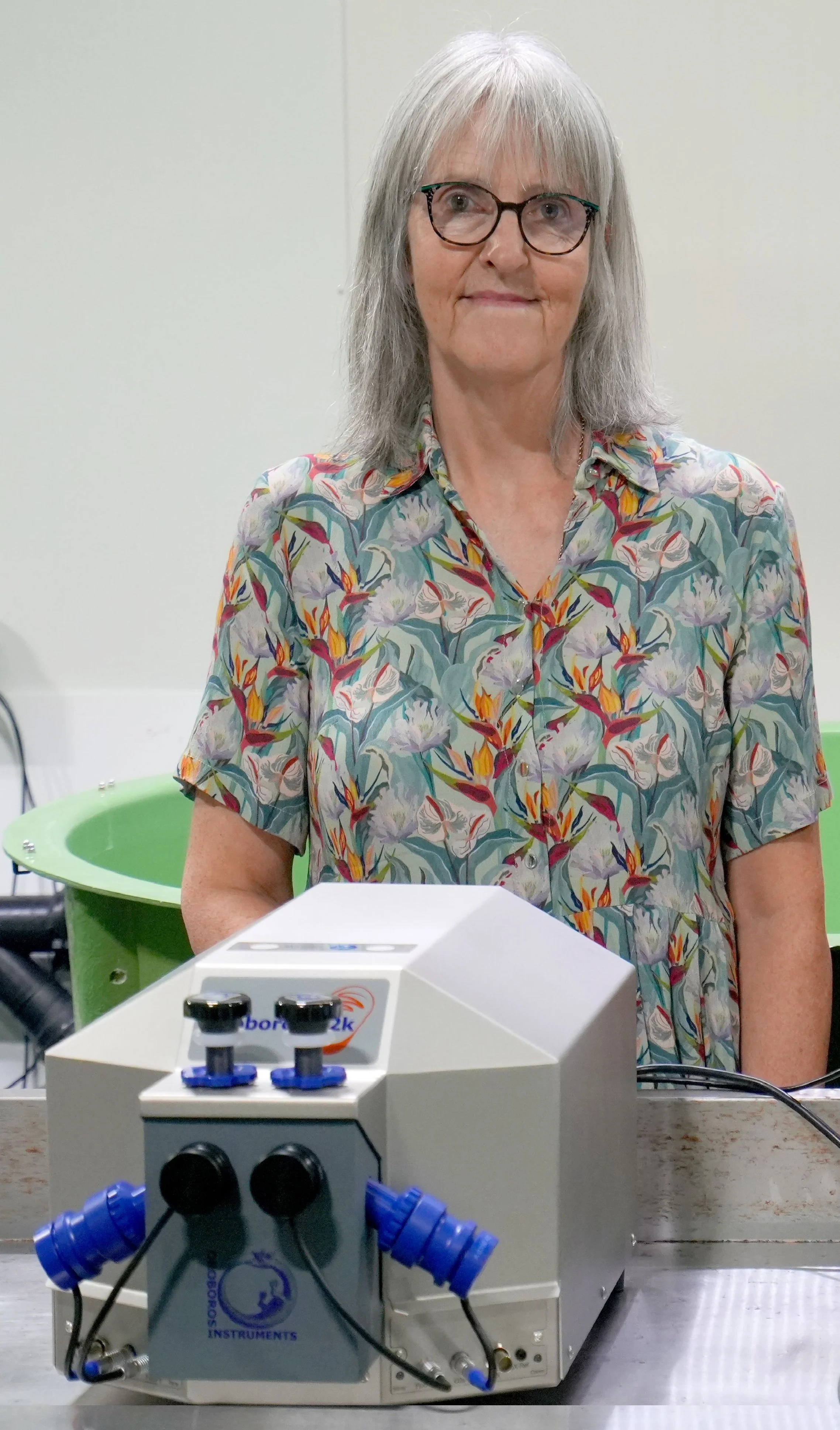
“As a geneticist you can turn your expertise to any aquaculture species. I’m a finfish scientist, but the breeding principles are the same”
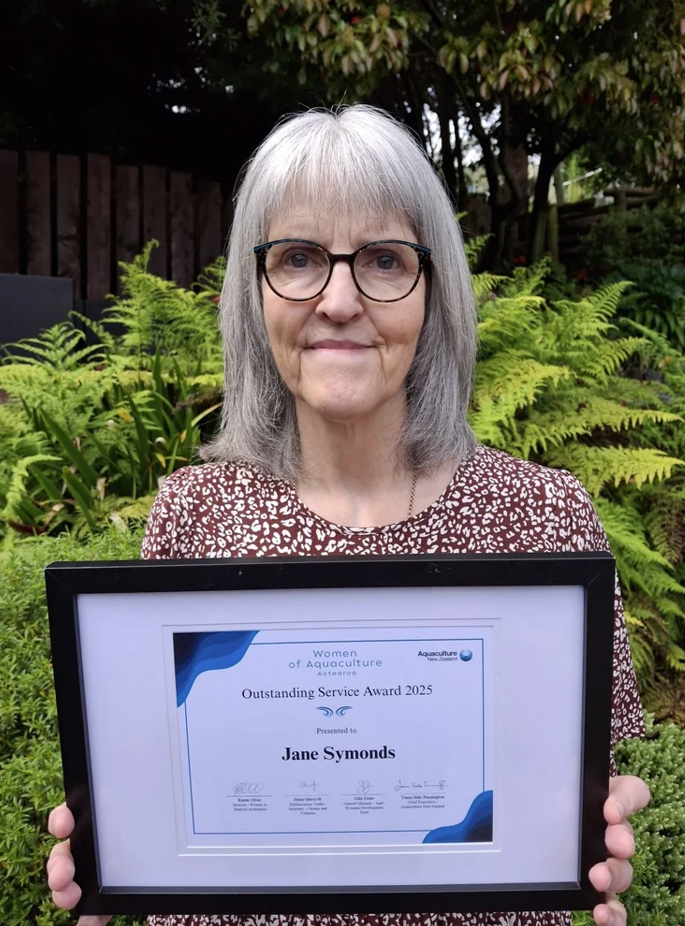
Jane received the inaugural Women of Aquaculture Aotearoa (WoAA) Outstanding Service Award in 2025