Accountability should not be optional - so why has Watercare’s Board Chair not resigned?
The Mahurangi Harbour is one of the jewels of the Hauraki Gulf — a place where families gather, boats launch, and oyster farmers like us work waters that have supported generations. It should be a source of pride. Instead, it has become a symbol of frustration and neglect.
For years repeated sewage spills into the Mahurangi River have contaminated the harbour. These are not unpredictable events. They are failures with known causes — failures that continue to harm our environment, our community, and our aquaculture sector, one of the most heavily regulated sectors in the country.
And yet through all of this, Watercare’s board chair, Geoff Hunt, remains in his role. Silent. Unaccountable. Absent when leadership is most required.
Recent events in Wellington highlight just how obvious this lack of accountability has become.
Earlier this month, the Moa Point wastewater treatment plant failed catastrophically, pumping around 70 million litres of raw sewage into Cook Strait every day. Wellington Water chair Nick Leggett resigned almost immediately, acknowledging the seriousness of the disaster and the need for leadership accountability. He made it clear that ‘leadership carries responsibility,’ describing the incident as ‘deeply serious’ and damaging to public trust.
Within days, two separate inquiries were launched:
• a Crown-led independent review, and
• a Greater Wellington investigation.
Wellington leadership treated the situation with urgency, transparency, and respect for the environment and public confidence.
Mahurangi has not been afforded the same respect.
The difference is stark:
• In Wellington, the root cause of the failure was not yet known — yet inquiries were launched immediately.
• In Mahurangi, Watercare knows exactly what is causing the repeated sewage spills, including the systems failure in October 2025 — yet no independent inquiry has been launched into Watercare, its governance and public accountability.
Instead, the community is left to absorb the consequences, again and again.
Would a continuous sewage spill into Wellington Harbour be met with this level of inaction? Would Auckland’s inner-city beaches be left contaminated while business carried on as usual? Why should Mahurangi — a harbour of immense ecological, cultural, and economic importance — be treated as lesser?
At the same time, it is impossible to ignore another uncomfortable question: why have those who so often champion environmental protection remained largely silent?
The NZ Green Party, along with recreational, conservation, and environmental advocacy groups, has not shown the level of public concern one would expect for repeated sewage contamination in a harbour of such ecological and cultural significance.
These organisations are typically at the forefront of defending coastal health, marine biodiversity, and communities whose livelihoods depend on clean water. Their absence on the Mahurangi issue is increasingly difficult to explain — and deeply disappointing for a community that has long stood for environmental stewardship.
If this level of pollution were occurring elsewhere in the Hauraki Gulf, it is hard to imagine such muted advocacy.
Mahurangi deserves the same urgency, the same voice, and the same defence.
Oyster farmers in Mahurangi operate under some of the strictest regulatory standards in New Zealand. Watercare, the organisation entrusted with protecting our water, should be held to at least the same standard. Instead, a double standard has emerged — one that erodes public trust even more quickly than raw sewage erodes water quality.
Wellington has shown what responsible governance looks like: swift action, genuine accountability, and leadership willing to step aside when systems fail. Mahurangi deserves nothing less.
Watercare must now demonstrate the same integrity — starting with leadership that accepts responsibility.
I am calling for:
1. The resignation of Watercare Board Chair Geoff Hunt.
2. An immediate, independent Crown inquiry into Watercare’s failures in Mahurangi.
3. Transparent communication and a publicly accountable remediation plan to restore trust in the harbour and the infrastructure that supports it.
Our community cannot continue in uncertainty while pollution persists and leadership avoids responsibility. A harbour as vital as Mahurangi deserves accountability, action, and respect.
Lynette Dunn
Chair, Mahurangi Oyster Association
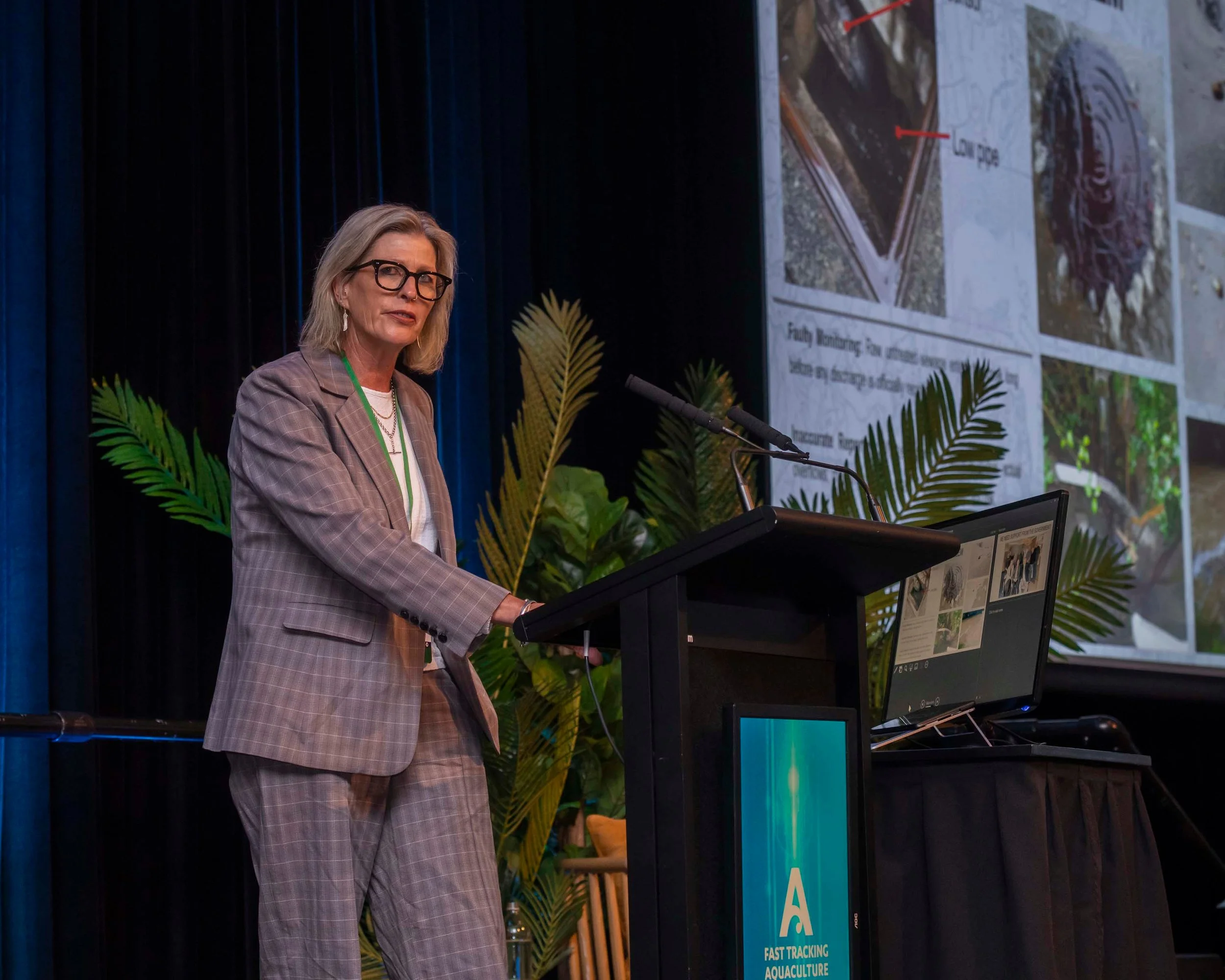
Lynette Dunn (Chair, Mahurangi Oyster Association) speaking at the 2025 Aquaculture New Zealand conference
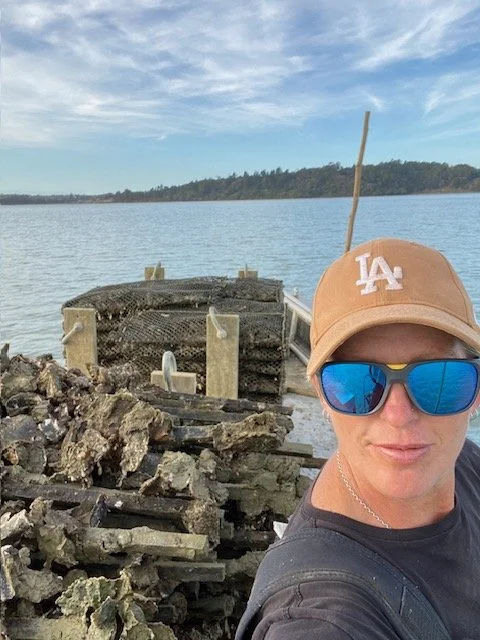
Lynette Dunn is demanding unaccountability.
“Our community cannot continue in uncertainty while pollution persists and leadership avoids responsibility. A harbour as vital as Mahurangi deserves accountability, action, and respect.”
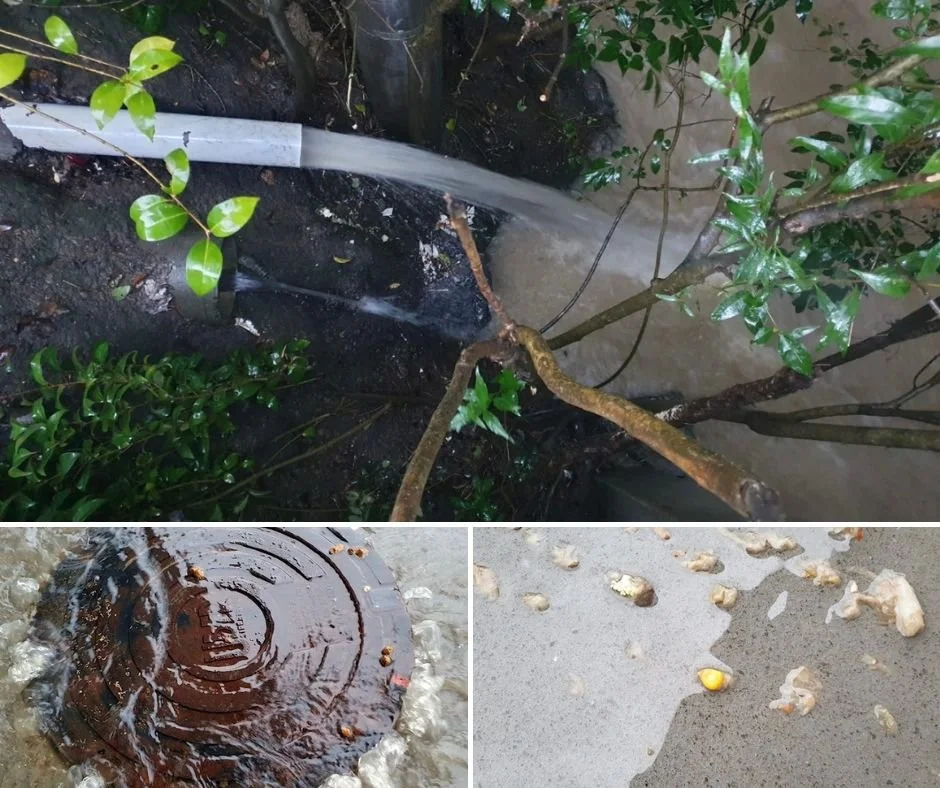
Raw sewage spills continue to pollute the Mahurangi River