Supporting the Next Wave
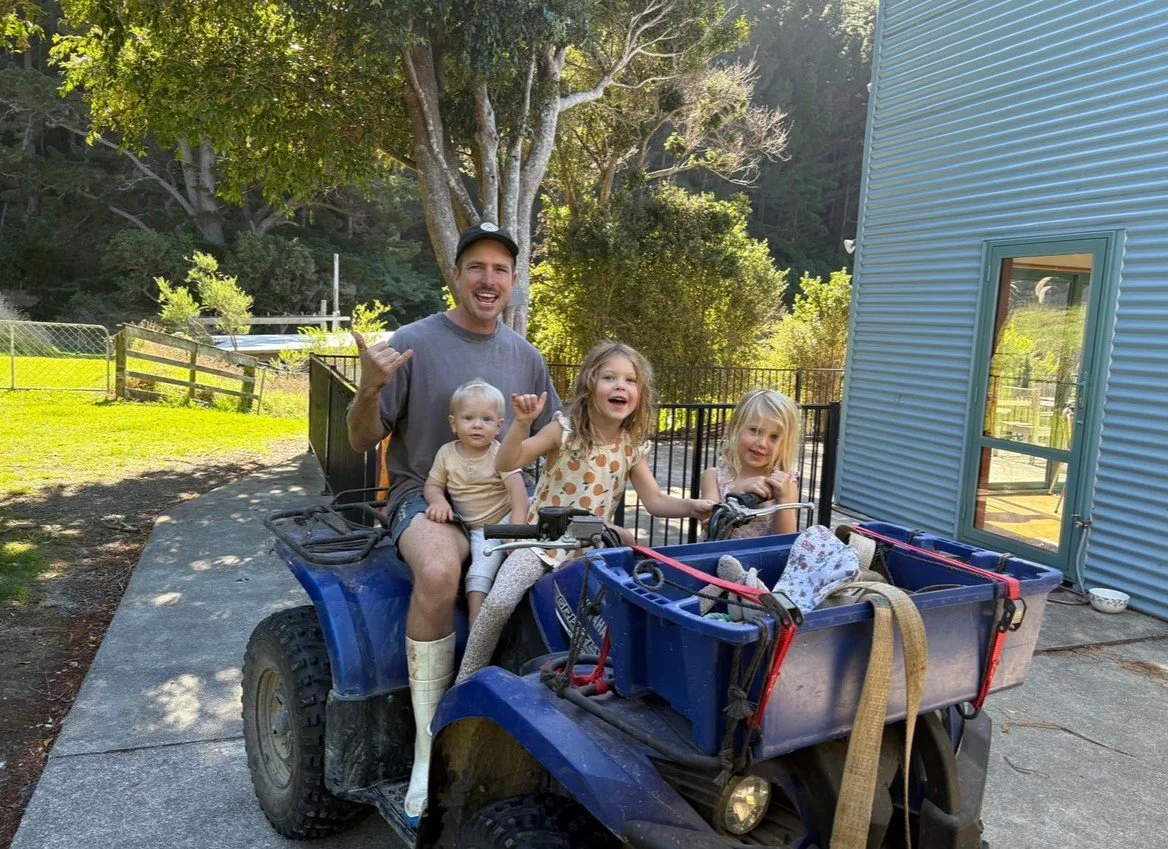
“I think the best we can do as operators is to be patient, try to mentor these younger crew and provide a safe opportunity for them to learn and grow within the industry. It’s not for everyone, however there are some real diamonds in the rough out there, so stick at it”
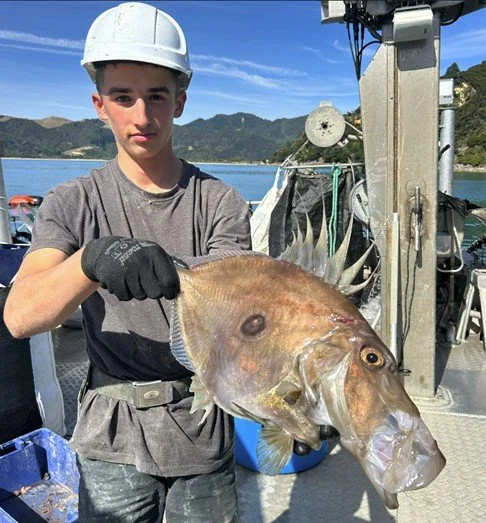
Lucas catching a John Dory while working on the boat in Wainui
Julian Goulding - Supporting the Next Wave
Julian Goulding’s connection to aquaculture runs deep, beginning in the early 80’s when his father, Jim, first started farming mussels in the Marlborough Sounds. Growing up immersed in the industry laid a strong foundation for his understanding of the sector. After spending time overseas working in the superyacht industry, Julian returned to Nelson with his young family - drawn back to his roots and the environment he knew best.
With aquaculture clearly in his blood, stepping back into the industry felt both natural and purposeful. He bought a strong entrepreneurial spirit and a hands-on leadership style to the business, driving its growth and continuing the family legacy with fresh energy and deep commitment.
Today, he has a small contracting company called Channel Marine, operating in the Sounds, Tasman and Golden Bays, running vessels like Blaze 2, Christina A, and Western Image. He works closely with various companies including MacLab, providing services such as seeding, farm maintenance, flotation, scientific serviced, surveying, dive support, and more.
A key focus for Julian has been creating opportunities for young people. One of his early hires, Caspian Smith, joined in his late 20s. While working with him, Julian paid for his skipper’s ticket and supported his transition to a more senior role. When Julian knew he’d need more help—especially with a third child on the way—he asked Cas to take on more of the on-water operations in the Sounds, and began training up a new deckhand.
That’s when Lucas Stump a Year 12 student from Nelson College came into the picture. After Julian posted online looking for help, Lucas’ mum reached out. Lucas impressed early, bringing hands-on experience from recreational fishing boats and a strong work ethic. He’s now pursuing his Deckhand certificate, with Julian and the team helping him stay on-track with the bookwork.
Julian also speaks highly of Dominic Johnson, another young recruit who has stepped up well and been slotting into the operation where needed. Dominic was recommended through industry connections and got an initial day’s experience with Stoney on the Vanguard before joining the crew.
Not every placement has been a fit—Julian notes that some employees do not always work out. But overall, he credits the success of his youth training efforts, to having a strong, willing team. “At the end of the day, it comes down to the willingness and ability of our skippers and senior crew, to be able to actually do it, a well-balanced team is key,” he says.
He’s also clear about the value of recognising hard work: “If guys show strong work ethic, and are committed, I’ll try my hardest to continue to get them involved when I can.”
Julian keeps things practical, even offering casual hours after school and during holidays. Lucas, for example, has helped out during term breaks and even returned early from a surf trip when the team was short-staffed.
While the boats and operations remain busy, Julian also sees the bigger picture. He supports more women getting into aquaculture, noting a recent positive experience when a young woman joined the team for float work. He recalls his brother and his partner operating as a successful team and says the industry would benefit from more diversity.
Looking ahead, Julian acknowledges generational differences in the workforce and encourages employers to adapt.
“I’m not one to give advice to the guys that have been writing the script on the aquaculture game, they are a wealth of knowledge and are doing a great job with the training and recruiting of the younger crew. Times have changed since a lot of these guys started and the younger generation coming through certainly have different needs and expectations. I think the best we can do as operators is to be patient, try to mentor these younger crew and provide a safe opportunity for them to learn and grow within the industry. It’s not for everyone, however there are some real diamonds in the rough out there, so stick at it.”
Julian sums up his operation as a collective effort: “It’s a strong team that are all willing to take on these young guys, not just me.”. That mindset—combined with his commitment to mentorship and development—has made his crew a place where young talent can thrive.