Negligence in the harbour: how pollution is crippling oyster farming in Mahurangi
Negligence in the harbour: how pollution is crippling oyster farming in Mahurangi
It was once a pristine estuarine environment and a cornerstone of Aotearoa's aquaculture industry but now Mahurangi Harbour, north of Auckland, is facing an ecological and economic crisis.
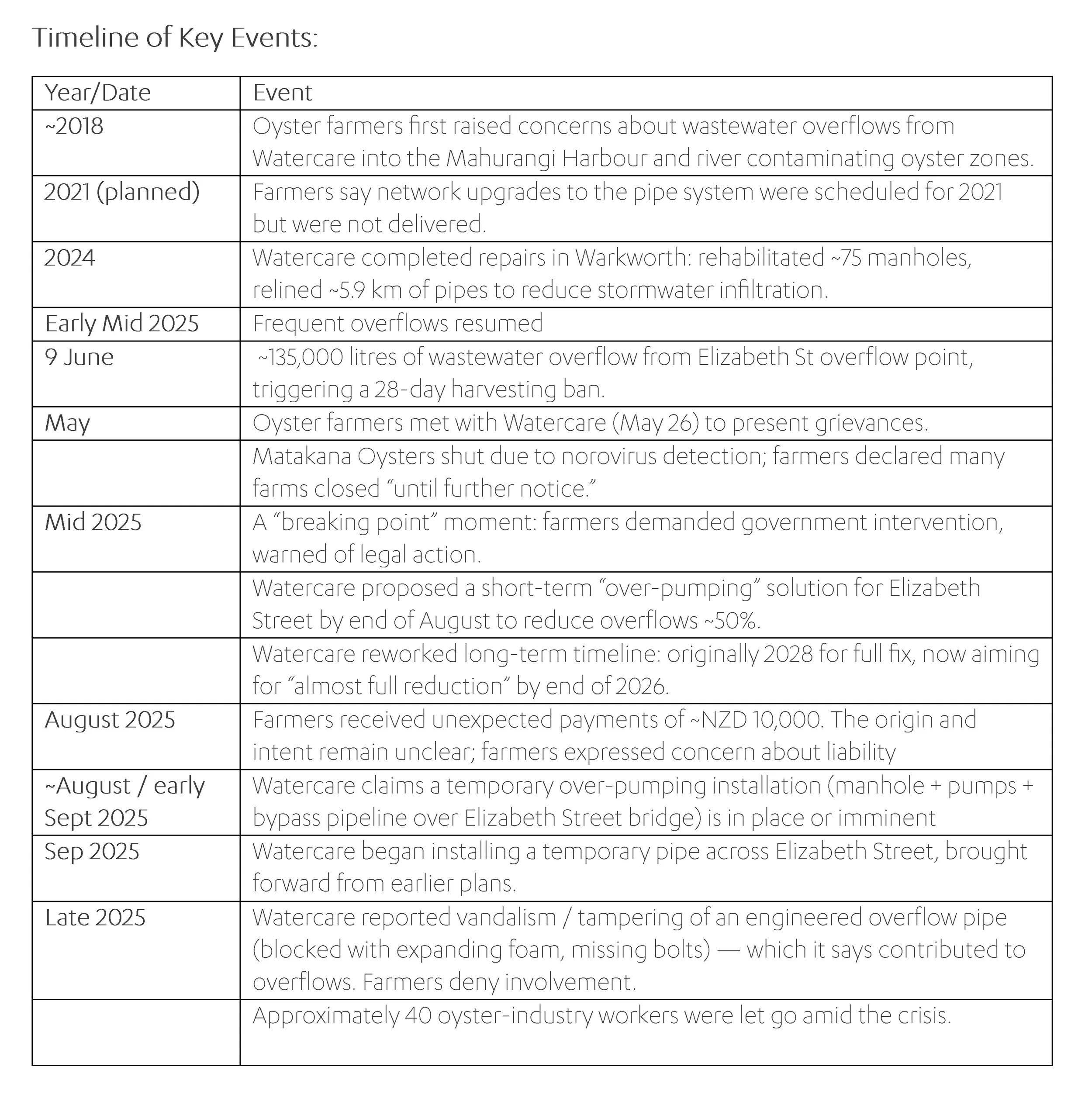
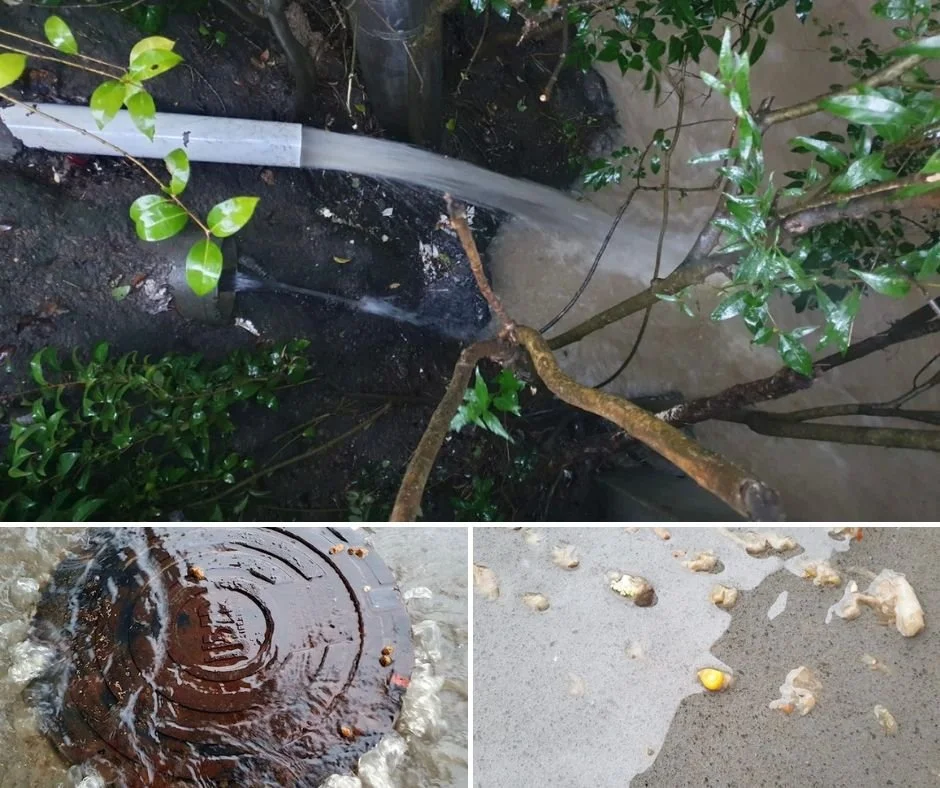
Nearly every time it rains untreated sewage spills into the Mahurangi Harbour causing the nine oyster farmers and three spat-catching operations to halt harvesting for 28 days to allow for pathogen testing.
This situation is threatening their livelihoods and the future of sustainable shellfish farming.
In 2025 alone, there have been 32 spills, resulting in 180 closed days and over 3,500 cubic meters of sewage discharged into the water.
Lynette Dunn, President of the Mahurangi Oyster Farmers Association, and her partner Trevor have been farming oysters in the harbour for 27 years.
She says for the past seven years, they’ve been pleading with Watercare to stop sewage spills into the harbour. However, the issue has worsened with urban development outpacing infrastructure upgrades.
“Watercare promise action, but to this day, raw sewage continues to overflow into the top of the Mahurangi River, flowing down into our oyster farms,” Lynette says.
Watercare acknowledges the problem but says it won’t be resolved until 2027 when a new treatment plant is expected to be operational.
The company cites the need to balance population growth, cost to ratepayers, and environmental impact.
However, the farmers argue that Watercare is breaching its Network Discharge Consent (NDC), which is intended to prevent harmful levels of contamination from entering local waterways.
In 2022, Watercare controversially increased the allowable overflow events per discharge point from two to 200 annually, and reclassified heavy rainfall from 20mls to 10mls—changes made without consulting the oyster farmers.
Every day they’re closed, the oyster farmers lose income, leaving many of them on the brink of financial collapse, and forcing some to lay off workers.
In 2025, farmers have only been able to harvest for four weeks.
“I have been going to the Matakana markets for 20 years and never had to miss but we haven’t had enough harvest days to be at the market,” says Lynette.
She says the previously successful businesses are now struggling and they feel completely impotent. The impact on their reputation will take years to recover.
“We need to gain back the trust of our customers and be able to have our product available consistently throughout the season. We can’t continue like this for the next two to three years.”
The farmers are calling on Ministers of Parliament to intervene.
“This is bigger than Mahurangi— it could happen in any aquaculture harbour. We need legislative change to hold councils and water authorities accountable,” Lynette urges.
They want their harbour protected to prevent further economic and environmental damage to Mahurangi’s shellfish industry.
Minister for Oceans and Fisheries, Hon Shane Jones, and Parliamentary Under Secretary Jenny Marcroft, having met with the farmers, are standing firmly behind them and pressing for swift action to resolve the situation.
Both leaders called out Watercare’s failures at the 2025 AQNZ Conference.
Mr Jones said that under the current RMA, Watercare has a legal right to pollute but MPI officials are looking at options through upcoming statutory reforms.
Meanwhile the situation remains unresolved.
Taking its toll
Lynette says the fight has taken a toll on the farmers—mentally, emotionally and financially.
“Every time it rains we freak out about how much sewage is going in the harbour.”
She says they have mortgages to pay, family to look after and there’s no money coming in.
“We started this year in the negative and we still have to work the farm.”
Unless financial support is provided until the new treatment plant is operational, many farmers may walk away.
“We need assistance to get us through— although I have no confidence that the plant will be running in 2027. The trust is gone.”
Mahurangi Harbour has supported sustainable oyster farming for over 60 years. The farmers vow to continue maintaining their farms and fighting for accountability.
“They will not stop until transparency is restored, and our harbour is safe again.”
Number of sewage spills:
· 2023: 18 spills, 79 closed days, 1,055 cubic meters of sewage
· 2024: 15 spills, 81 closed days, 885 cubic meters
· 2025 to Oct 2025: 32 spills, 180 closed days, 3,585 cubic meters