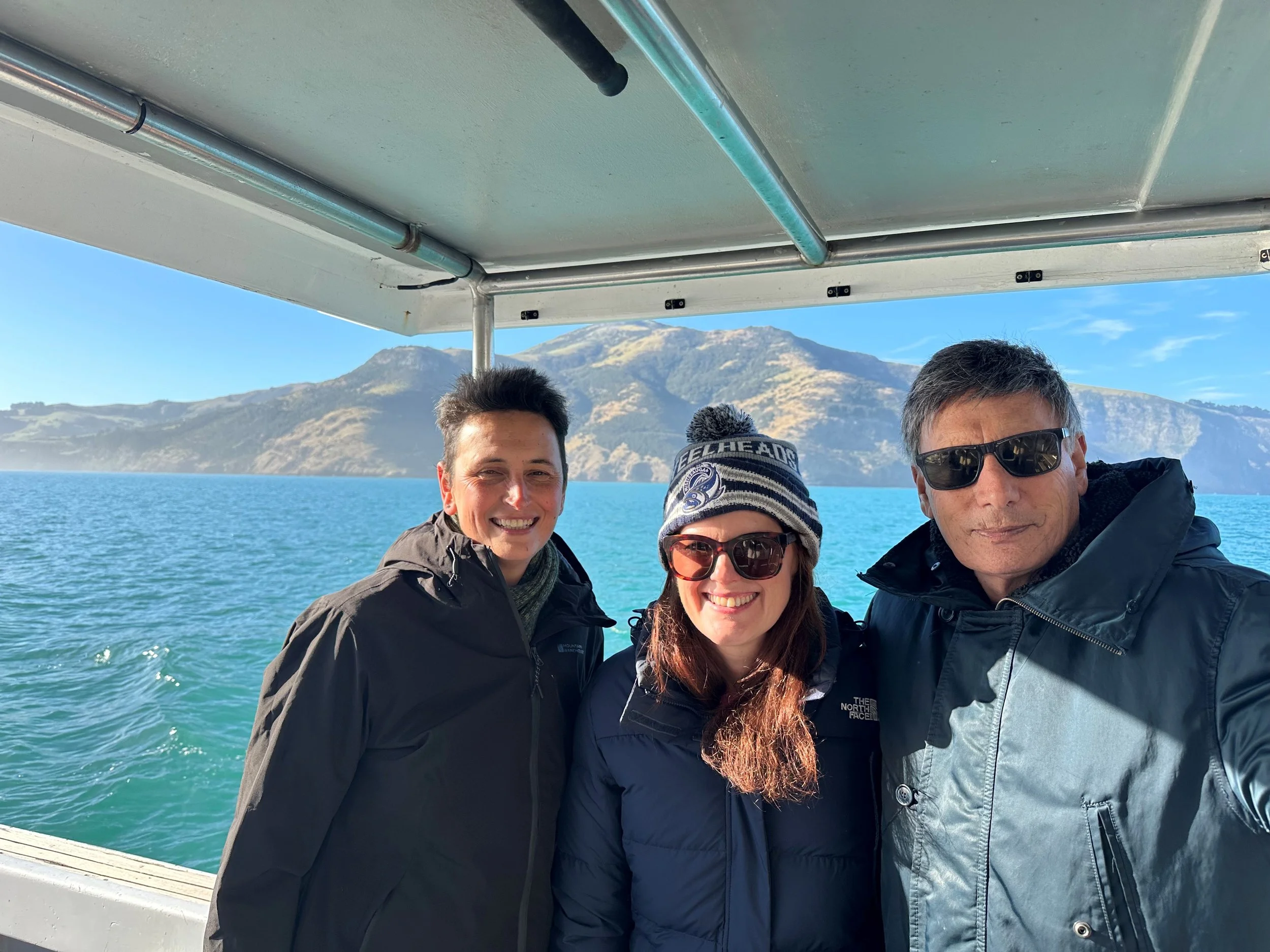
Left to Right: Tee Hale Pennington (Aquaculture New Zealand), Tanya Stevens and Rik Tainui (Ngāi Tahu)
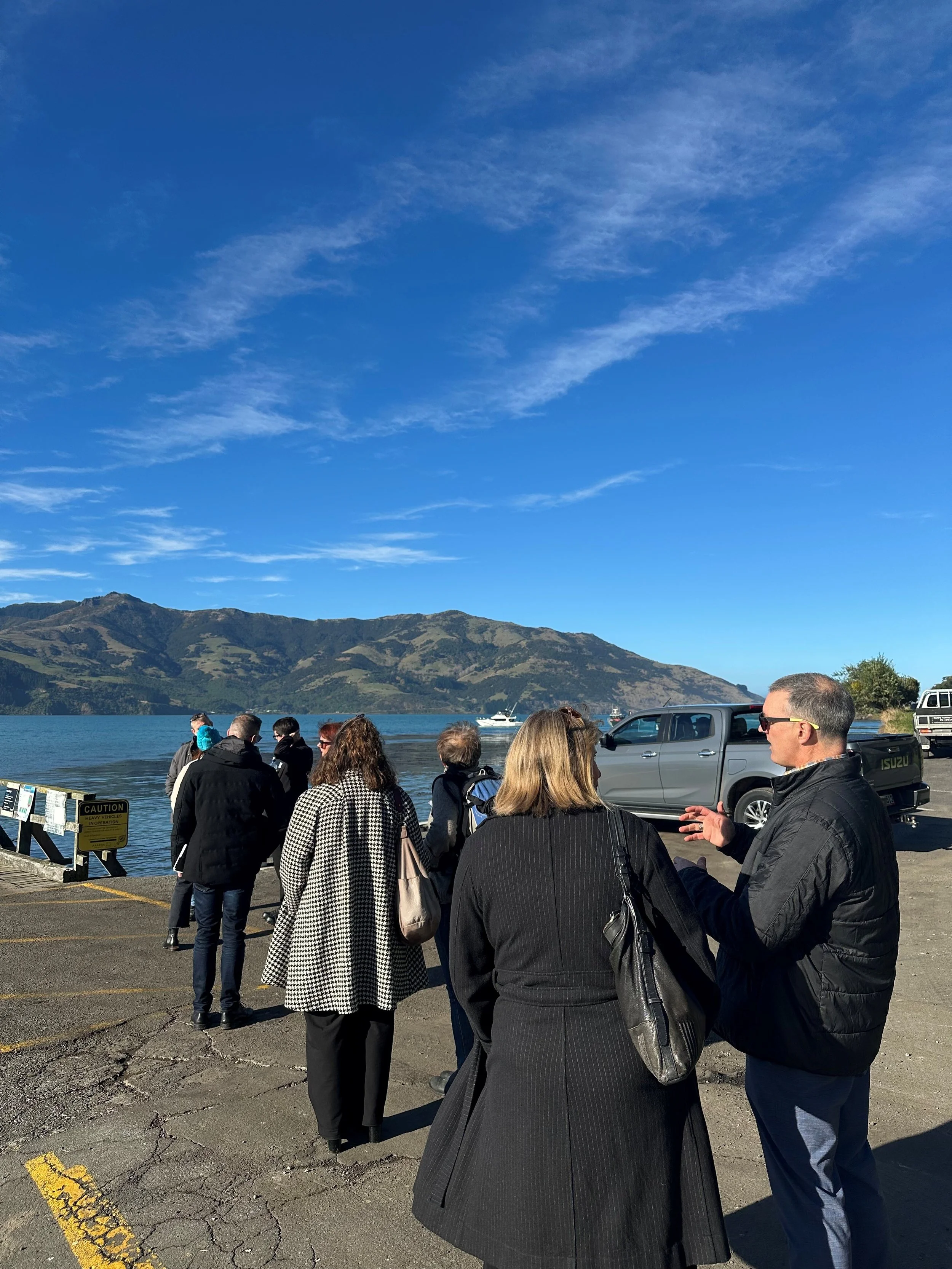
Why engagement matters for aquaculture’s future
It was a stunning day on the water in Akaroa Harbour, the kind of day that reminds you exactly why this work matters.
Hosted by Ahi Mokopuna Akaroa Salmon, Ōnuku Rūnanga and Te Rūnanga o Ngāi Tahu, we departed from Wainui Bay to visit operating salmon farms and the Aquaculture Settlement Areas (ASAs) at Pariwhero (Lucas Bay).
Getting out on the water provided something no briefing paper ever can, real-world context. It was also great to hear from Ngāi Tahu representatives who talked about the intergenerational connection to place and what this means for the ASAs.
These experiences are invaluable. They bridge the gap between policy development and practical application in the marine farming environment.
Building shared understanding among Ministerial advisors, officials, iwi and industry is essential if we are to achieve regulatory outcomes that are purposeful, enduring, and reflect both leadership and environmental stewardship.
The day created space for open conversations with farmers, iwi and officials about the regulatory settings needed to enable the effective delivery of aquaculture settlement areas, and how we can progress this important kaupapa together.
Aquaculture settlement outcomes are critical to the future of New Zealand’s aquaculture ambitions. They provide a pathway for iwi to realise their aspirations and increase participation in the sector, strengthening both regional economies and our collective stewardship of the marine environment.
Aquaculture New Zealand supports regulatory changes that will deliver aquaculture Treaty settlements more effectively, including more enabling consenting pathways for aquaculture space within settlement areas. Aquaculture New Zealand’s submission on the new Bills to replace the RMA reinforces this direction.
When we connect people, place and policy, we build better outcomes.