Ōpōtiki rangatahi dive into aquaculture
A powerful local partnership is giving rangatahi in the eastern Bay of Plenty a hands-on pathway into the thriving moana-based industries surrounding their community.
Whakatōhea Iwi, the Primary Industry Training Organisation (Primary ITO), Cawthron Institute, and Ōpōtiki College—supported by input from Aquaculture New Zealand—have developed a pilot aquaculture programme for ten Year 12 students.
The initiative builds on a long-held Whakatōhea vision. Two decades ago, the Iwi set out to establish a Greenshell™ mussel farm that would create jobs, generate income for whānau, and strengthen the future of the Ōpōtiki community.
Today that vision is real: more than 3,800 hectares of nutrient-rich offshore waters now support a thriving mussel farm, with daily harvests delivered to the Whakatōhea processing facility opened in 2021.
Simon Croom, General Manager Delivery at Primary ITO, says the partners came together to help develop a skilled local workforce, especially once the mussel processing factory was built.
“We had to find an innovative way to train people pre-employment and then worked on creating a pathway into aquaculture,” he explains. “Ōpōtiki College then picked up the school programme. It works because it’s not just classroom learning — students get to touch things, get their hands dirty, and learn out in the environment.”
Whakatōhea Iwi Development Project Manager Danny Paruru says the programme opens doors for rangatahi and highlights the range of career pathways available — from workplace training and university study to technical, production, skipper, and diver training.
“The new harbour and factory have created huge opportunities in aquaculture and the marine sector,” he says. “We know the numbers, we see the growth, and this vocational model gives our young people a real chance to succeed.”
Ōpōtiki College aquaculture teacher and careers advisor Alison Waller says the students are part of something “truly special.”
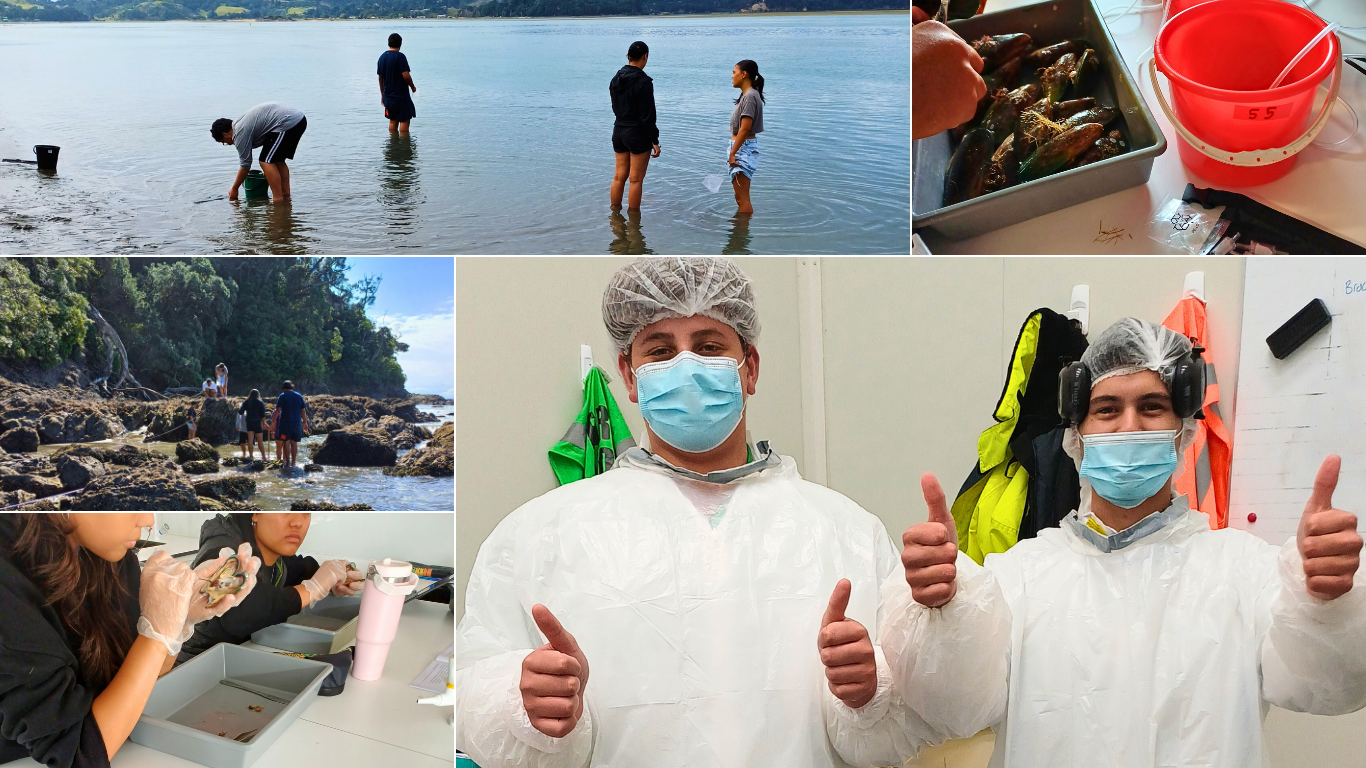
Throughout 2025 the group took part in field trips, practical experiments, and immersive learning designed to build real understanding of marine science and aquaculture. Students dissected mussels to study their anatomy, experimented with how salinity affects byssal thread production, explored local ecosystems, kayaked across the harbour to observe regenerating mussel beds, and prepared kai for assessment as part of their food safety training.
“The course wasn’t just about science,” Alison says. “It was about teamwork, respecting the environment, and building confidence in new places.”
She says the programme’s success reflects the strength of the partnership between Iwi, community, and education providers.
“The school has a long, trusted relationship with Whakatōhea. We feel privileged to help deliver a pathway for students into one of the Bay of Plenty’s fastest-growing industries.”
Ōpōtiki College plans to expand the programme in 2026 with more field-based learning, additional industry guest speakers, and strengthened links with Whakatōhea Mussels and local marine researchers.
Today, the mussel industry is not only a major employer in Ōpōtiki but a cornerstone of the region’s economic future—made stronger by the next generation learning directly from the moana that sustains them.
“The school has a long, trusted relationship with Whakatōhea. We feel privileged to help deliver a pathway for students into one of the Bay of Plenty’s fastest-growing industries.”