After a roughly 70-day journey from Norway, the Ronja King arrived in Picton this morning.
The Marlborough community will be used to seeing vessels of all shapes, sizes, and specialties gliding through the Sounds, but this is the first time anyone would have set eyes on a wellboat in the neighbourhood. That’s because this is the first time a wellboat for use in the New Zealand aquaculture sector has ever entered our waters.
At 57m long, the Ronja King is a specialised vessel designed to transport live fish in large, carefully controlled seawater tanks. Often described as a “floating aquarium”, wellboats are standard infrastructure across the global salmon industry.
“Wellboat technology might be standard globally, but for our small-scale and niche king salmon industry here in Aotearoa New Zealand, it is a very big deal,” says CEO Carl Carrington.
This is truly a major step forward in the evolution of our farming operations and expanding our potential profitability as a company. The Ronja King is forecast to boost our annual harvest volumes by around 2,000 metric tonnes annually, which we conservatively estimate could generate an additional $60 million in annual revenue – increasing even further once Blue Endeavour is operational and scaled.”
These are the kinds of productivity-enhancing initiatives we need to invest in for New Zealand’s future resilience, especially in the primary sector. The Ronja King is clearly a very welcome addition to our company,” says Carl.
Delivering Blue Endeavour– the World’s First Open Ocean King Salmon Farm
The Ronja King is also key to unlocking NZKS’ new open ocean farm, Blue Endeavour. Today also marked the complete installation of the farm pilot infrastructure (anchors, mooring grid, and two pilot pens). The two pilot pens were towed successfully from their inshore farm location in Te Hoiere/Pelorus Sounds to their permanent open-ocean location (7km off Cape Lambert) at Blue Endeavour, over a three-day period, arriving on Saturday. This significant milestone was announced to the NZX/ASX market this morning.
The most significant delivery the Ronja King will undertake initially will be transferring the inaugural cohort of our king salmon to the Blue Endeavour site in around a month's time.
The Ronja King is owned and operated by Sølvtrans, a global leader in wellboat services. The name “Ronja King” honours Sølvtrans’ tradition – “Ronja” combines the names of the founders’ children, with “King” recognising its connection to NZKS and the King salmon species.
“Watching the Ronja King enter through Queen Charlotte sounds this morning, and berth at Port Marlborough, was really watching history in the making for the New Zealand salmon sector,” says Grant Lovell, GM Aquaculture.
I have worked for this company for 25 years, and I can’t emphasise enough just how transformational this shift to a wellboat farming model is for our operations, our fish and therefore our shareholders, and our company as a whole.”
In the first few weeks, the Ronja King will be completing final onboarding and operational checks with our local maritime partners, alongside crew familiarisation and trial movements. Once fully operational, the vessel will begin carrying out normal farming support activities, which are primarily relocating stock around the sounds, with its main base of operations being Kura Te Au/Tory Channel. It will come into Port periodically for refuelling and supplies.
The Ronja King will be crewed by five team members, a mixture of highly specialised professionals. This is expected to bring a range of economic benefits for the top of the south region, through local berthing, servicing requirements, logistics, and maritime support.
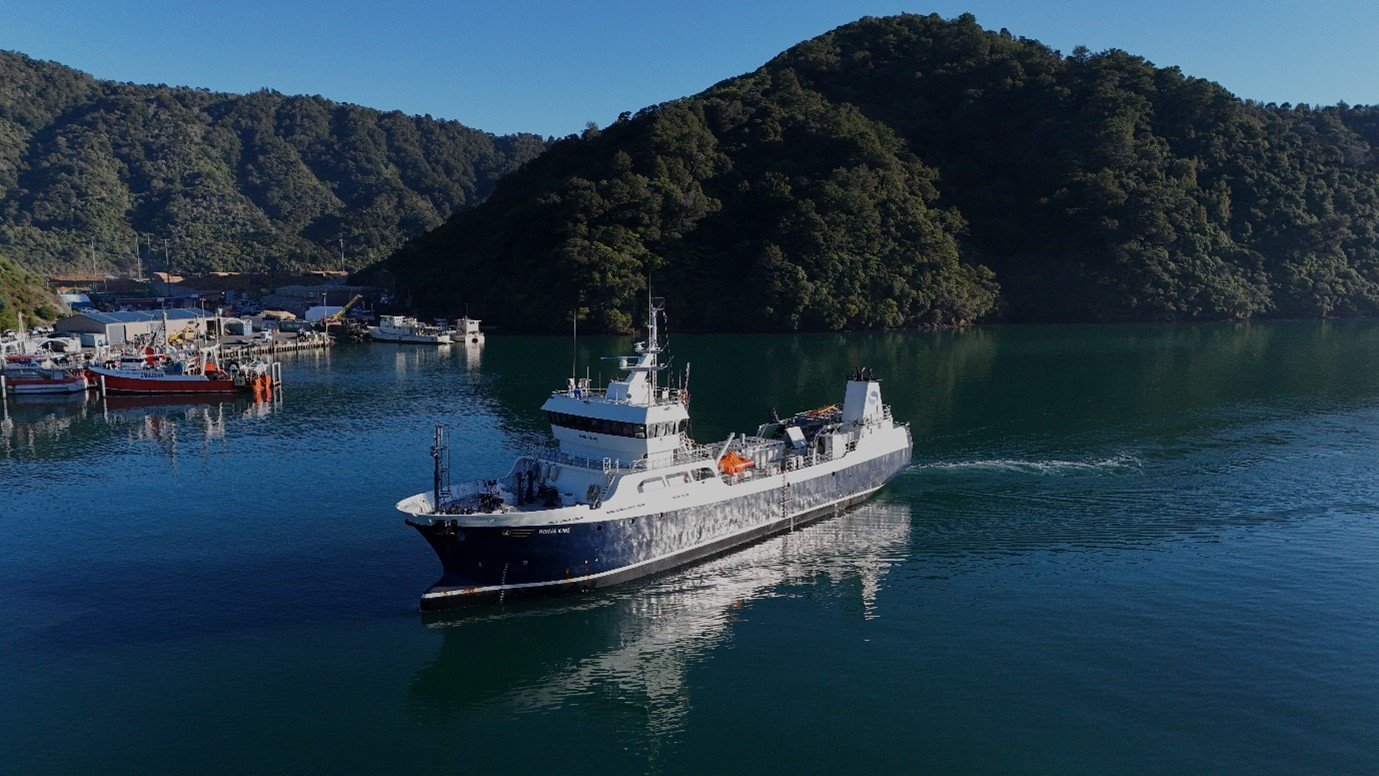
The Ronja King arrive at Picton Port, Marlborough. Photo by Tim Cuff
“Wellboat technology might be standard globally, but for our small-scale and niche king salmon industry here in Aotearoa New Zealand, it is a very big deal.”